


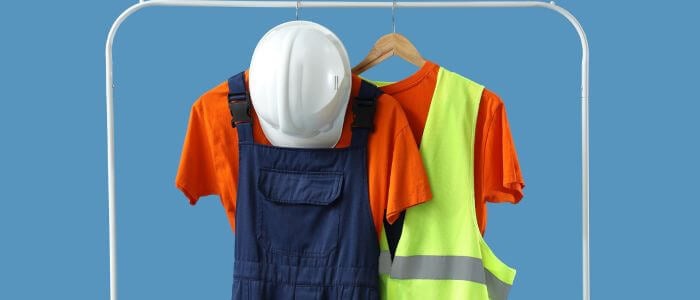
Tools for the job: the engineering behind protective apparel
In this final post of our series exploring apparel designed for function rather than fashion, we turn our attention to the world of professional workwear.
At first glance, workwear might appear straightforward: boots that endure rough terrain, gloves that protect hands, jackets that stand up to rain and cold… but look closer and a different picture emerges. Modern workwear is not simply clothing designed to endure difficult environments; it is a carefully engineered system of protection, durability and function.
Across industries – from construction and manufacturing to logistics and utilities – workwear sits at the intersection of safety, regulation and technical innovation. It must perform reliably under pressure, protect the wearer from specific hazards, and do so day after day in demanding conditions.
Like specialist sports apparel and high-performance outdoor gear, workwear represents a category where design decisions are driven not by aesthetics but by performance, regulation and real-world demands.
Designed for protection
The fundamental purpose of workwear is protection. In many environments, clothing forms the first line of defence between the worker and potential hazards. These hazards may be physical, environmental, mechanical or chemical, and each requires a different technical response.
Protective gloves must resist abrasion, puncture or chemical exposure. Boots must shield feet from impacts while providing grip and stability on unpredictable surfaces. Jackets and trousers may need to offer visibility in low-light conditions or resistance to heat, sparks or moisture.
Each of these garments is the result of detailed design and material selection. Fabrics must balance durability with flexibility. Reinforcements are placed in high-stress areas such as knees, elbows and palms. Fastenings, seams and closures must function reliably even after months of wear in harsh environments.
In many cases, the design challenge lies not only in protecting the wearer but also in allowing them to work effectively. A glove that prevents injury but restricts dexterity might be pointless. A jacket that offers insulation but traps moisture can quickly become uncomfortable during long shifts.
As with specialist sports apparel, the engineering challenge lies in finding the right balance between protection, performance and comfort.
 Built for the realities of work
 Built for the realities of work
Unlike consumer clothing, workwear is expected to endure prolonged and repeated use in environments that place constant strain on materials. Abrasion from rough surfaces, exposure to chemicals, repeated washing cycles and heavy physical movement all contribute to wear and tear.
To address this, manufacturers rely on specialised fabrics and construction techniques. Synthetic fibres, reinforced stitching, multi-layer materials and impact-resistant components all contribute to garments that can withstand demanding conditions.
Footwear offers a particularly clear example of this approach. Safety boots incorporate features such as steel or composite toecaps, puncture-resistant midsoles and slip-resistant outsoles. Each element serves a specific purpose and must meet strict performance requirements.
Similarly, protective gloves may combine different materials across the palm, fingers and back of the hand, each chosen for a specific protective property.
These design decisions are not arbitrary. They are informed by extensive testing, certification standards and the real-world feedback of workers who rely on the equipment every day.
Regulation and PPE standards
Workwear is not only shaped by performance demands but also by legal and regulatory requirements. In many industries, employers have a legal obligation to provide appropriate personal protective equipment (PPE) to their workforce.
These requirements exist for good reason. Construction sites, manufacturing facilities, energy infrastructure and transport networks all present potential hazards that cannot be eliminated entirely through engineering controls alone. Protective clothing and equipment, therefore, become an essential layer within broader safety systems.
As a result, many workwear products must comply with recognised safety standards and certifications. These standards define how equipment should perform under specific conditions – whether resisting impacts, providing cut protection or ensuring visibility in low-light environments.
High-visibility garments, for example, must meet strict requirements regarding reflective materials and colour contrast to ensure workers remain visible in hazardous environments. Safety footwear must pass tests for impact resistance, compression and penetration. Protective gloves are evaluated for abrasion resistance, tear strength and chemical protection depending on their intended use.
Compliance with these standards requires rigorous testing, documentation and quality assurance. Behind every certified product lies substantial research, engineering, and validation.
Function over fashion
While aesthetics may still play a role in modern workwear, function remains the guiding principle. Every seam, panel and fastening must contribute to performance, durability or safety.
In this sense, workwear shares a common philosophy with the specialist sports apparel and outdoor equipment explored earlier in this series. In each case, clothing is treated less as fashion and more as functional equipment – tools designed to help people perform demanding tasks in challenging environments.
The result is apparel that may look simple on the surface but represents a complex balance of materials science, ergonomic design and practical experience.
A shared approach to product development
 A shared approach to product development
At immago, this approach to product development feels very familiar. The companies that design protective gloves, safety boots and high-performance workwear invest significant time and resources into research, testing and refinement. Every product represents a careful response to a specific functional challenge.
The same philosophy underpins the way we develop and supply our own products. Understanding the technical demands placed on equipment – and ensuring that products meet those demands reliably – requires close attention to detail, rigorous standards and continuous improvement.
In that sense, the journey of workwear manufacturers mirrors our own. Whether designing protective clothing or sourcing specialised components, the goal remains the same: delivering products that perform exactly as intended when it matters most.
As we conclude this three-part series, we’ve explored a common thread running through very different categories of apparel.
From the data-driven precision of specialist sportswear, to the resilience of high-performance outdoor gear, and finally the protection and reliability demanded of professional workwear, one principle remains constant: function comes first.
In each case, these products are the result of careful engineering, extensive testing and a deep understanding of the environments in which they are used.
We recognise and respect the level of research, development and expertise that goes into creating apparel built for performance. It reflects the same mindset we bring to the products we source and supply; reliability, precision and thoughtful design are never optional, but essential.
If you’d like to talk about how immago can help your brand stand out with sustainable solutions, get in touch with us today. We’ve been in this industry for decades, and know how to combine experience, innovation and personal service to provide your business with an competitive edge.